
How to Grow and Care for Fiddle Leaf Fig

The fiddle leaf fig (Ficus lyrata) has become one of the most sought-after indoor plants in Australia, loved for its large, glossy leaves and striking shape. But along with its beauty comes a reputation for being diva-like and challenging to care for.
That being said, once you understand their needs and avoid some common mistakes, you can keep this plant alive and healthy. Adding this plant to your collection will reward you with a stunning, large tropical statement plant that delivers instant impact indoors or creates a vibrant tropical feel in your sheltered outdoor space.
This guide walks you through everything you need to know so you can feel confident bringing a fiddle leaf fig into your home.
How to Choose the Best Pot?
A key to getting started and giving your Fiddle leaf the best chance is to select the correct pot. Firstly, you want a pot with a drainage hole at the bottom. Fiddle leaf figs hate sitting in water, so a container with drainage holes is essential. Without proper drainage, water can collect at the base, leading to root rot.
If you find a decorative pot without holes, don’t fear – you can keep the plant in its original nursery pot and place that inside the decorative pot,but make sure you add a layer of small stones or gravel at the bottom. This helps water flow out more effectively and keeps soil from clogging the drainage holes.
Terracotta or ceramic pots are excellent choices because they allow the soil to breathe and help excess moisture evaporate. You want to select a pot only slightly larger than the current one. Fiddle leaf figs prefer to feel a bit snug in their homes, and too much extra space can retain excess moisture, leading to root rot.
What’s the Best Soil?
For potting mix, use a well-draining premium indoor potting mix designed for good drainage. For Australian homes, we recommend Scotts Osmocote Indoor Plants Premium Potting Mix. It is made with the right blend of nutrients and ingredients to provide optimal aeration and water retention to support healthy growth. It also does not contain any pine bark, which is known to invite those annoying fungal gnats.
What is the Best Light for my Fiddle Leaf Fig?
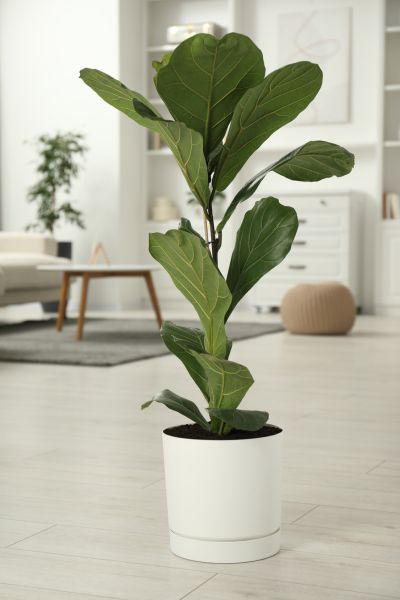
Fiddle leaf figs crave bright, indirect light, and it is one of the most important factors in keeping a fiddle leaf fig healthy. These plants love bright conditions, but it’s all about balance with these fussy beauties. Ideal placement is a position with filtered, bright, indirect light. Think near a window that gets morning sun. But never in direct sunlight, avoid harsh afternoon sun as this can scorch the leaves, leaving brown patches.
Fiddle leaf figs are drawn and naturally grow toward the light, which can cause them to lean. Rotate the pot once a month so all sides receive even exposure; this prevents lopsided growth and ensures a balanced canopy.
Consistency is also important. Fiddle leaf figs don’t like being moved around frequently. Once you find a good spot, try to keep them there. Sudden environmental changes, such as temperature changes, can stress the plant. So avoid placing near air conditioners, heaters or areas prone to drafts.
How Often To Water?
Watering is where most beginners go wrong. Fiddle leaf figs are sensitive and require the right balance when it comes to watering. They prefer a deep, thorough soak followed by a drying period, rather than constant soaking. When watering, give it a good soak and pour evenly over the soil until it begins to drain from the drainage holes. This ensures the roots receive moisture. Allow any excess water to drain completely, and don’t leave it standing in water, as this invites root rot.
Before watering, check the soil by inserting your finger into the top few centimetres. If it feels dry at that depth, it’s time to water. If it’s still moist, wait a few days and check again. A good practice is to check once a week and water if required, but don’t follow a strict schedule; let the plant tell you when it wants water. Watering needs will vary with seasons and environmental conditions.
Best Conditions For A Fiddle Leaf Fig
Fiddle leaf figs are native to tropical rainforests, so they love humidity. Whilst most Australian homes would be suitable, it is important to keep the environment at a stable, ideal temperature between 18°C and 26°C. Keep the plant out of drafts and away from heating or cooling vents.
These plants thrive in warm conditions and would benefit from an occasional light misting or being placed near other tropical plants in the same area to increase humidity. Dramatic changes in temperature can stress the Fiddle leaf figs and lead to leaf drop.
It’s important to keep the leaves clean. Dust buildup can block light and disrupt its natural feeding. Gently wipe the leaves with a damp cloth every week or two to keep them healthy and looking glossy.
When and how to Fertilise?
During spring through to early autumn, your plant will benefit from being fed with a liquid fertiliser every two weeks.We recommend Scotts Osmocote Pour + Feed, to provide balanced nutrients. Alternatively, you can opt for a controlled-release fertiliser that releases nutrients as required over a 6-month period and Scotts Osmocote Controlled Release Fertiliser for indoor plants is a great option. During the winter season, stop the feeding altogether, as overfeeding is a real risk with these plants and can damage the leaves and roots.
How to Repot your Fiddle Leaf Fig?
Fiddle leaf figs grow steadily when conditions are right, and over time, they may outgrow their pot. You’ll know it’s time to repot when roots start emerging from the drainage holes or the plant dries out very quickly after watering. Typically, you would want to repot your fiddle leaf fig every 1-2 years, depending on plant growth. The best time to report is alawys in spring, when the plant is in its growth phase.
When repotting follow these simple steps:
-
- Choose a pot slightly larger than the current one. Moving up sizes gradually helps prevent shock and maintains proper moisture balance.
- Line the base of the new pot with small stones or gravel to support good drainage.
- Part fill your new pot using fresh premium potting mix. This gives the roots and plant a boost. Healthy roots are critical for maintaining lush foliage in tropical indoor plants.
- Remove the plant from its old pot, be careful to not damage the roots. Check that the root ball is not compacted with soil. If so, gently loosening it can improve airflow and water distribution supporting healthy growth.
- Fill the pot with the rest of the new potting mix.
- Water thoroughly and let drain.
- Allow the plant settle for a month before applying any fertiliser.
How to Prune and Propagate?
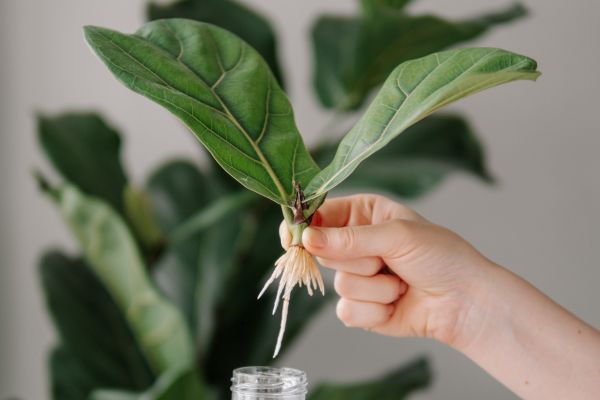
Pruning is not only about maintaining appearance, but it also encourages healthier growth. If your fiddle leaf fig looks sparse or top-heavy, pruning can help manage the shape and size. Using clean, sharp shears, cut just above a node (where the leaf attaches to the stem), and this is where the new growth will emerge, resulting in a fuller-shaped plant.
After pruning, you can place a healthy cutting in water. You want to ensure the cutting has a few leaves at the top and a bare stem section at the bottom. Place the cutting in water in a bright spot and change the water weekly. Roots will typically start to form in a few weeks. Once they reach a few inches in length, the cutting can be planted in soil.
Common Fiddle Leaf Fig Problems
Even with good care, issues can arise. The key is identifying the cause early. The most common problems with Fiddle leaf fig are:
-
- Brown Tips – it usually means the plant isn’t getting enough water or the air is too dry. Try watering more regularly and raising the humidity around your plant.
- Yellow Leaves – often means its overwatered. Make sure your pot drains well and let the soil dry out more before you water again.
- Drop Leaf – usually indicates that the plant is stressed. Ensure the plant is not being moved, in a walkway that gets knocked. It could also be a result of sudden changes to light or being in a drafty spot. Try to the its environment stable to avoid this issue.
- Pests – mealybugs, scale or spider mites may occasionally appear. These can be treated by wiping the infected areas or for larger infestations use an organic insecticidal soap or neem oil.
Caring for a fiddle leaf fig may seem intimidating at first but becomes easier once you understand its needs. Get the basics right: bright indirect light, good drainage, deep but infrequent watering, regular leaf cleaning, and a stable environment. With patience and attention, your fiddle leaf fig will reward you with lush, striking foliage and grow into a beautiful feature plant in your home.
If keeping a live plant feels too high-maintenance—or your space lacks the light a fiddle leaf fig needs—a faux version is the perfect solution. It’s an easy way to add greenery and style to your home, providing the same lush look but without the upkeep.