
How to grow and care for Calathea Ornata (Pin Stripe Plant)
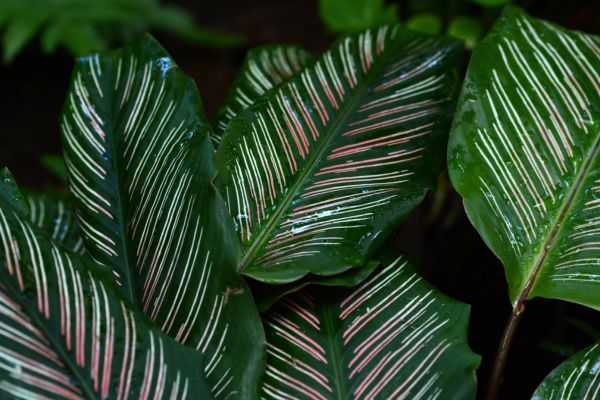
Calathea ornata, commonly known as the pinstripe plant, is considered one of the most attractive and members of the calathea family. Its deep green leaves have thin pink or cream lines that resemble fine brush strokes, giving the plant its “pinstripe” nickname. Native to the rainforests of South America, this plant grows beneath dense tree canopies, where high humidity, warm temperatures, and filtered light prevail. It’s part of the Marantaceae family, often called prayer plants, because of their unique leaf movement. The leaves close up at night, then reopen during the day when exposed to sunlight.
Elegant and eye-catching, it brings a refined feel to any indoor space, and it’s easy to see why it’s a favourite among indoor plant lovers. But while it’s undeniably beautiful, this tropical plant has a reputation for being a little particular. This tropical plant prefers an environment that resembles its natural rainforest habitat. Follow the steps in this guide to create the right environment and maintain the conditions to keep your calathea ornata plant healthy.
Light Requirements
Calathea ornata grows best in medium to bright, indirect light. It likes spots where sunlight is softened or filtered before it hits the leaves. An east-facing window usually gives gentle morning sun, which is ideal. If you put the plant near a west- or south-facing window, keep it away from the window sill and glass, or use sheer curtains to soften the light.
Direct sunlight can damage the foliage, causing the pink striping to fade and the leaf edges to scorch. Prolonged exposure to strong light may also make leaves stiff or brittle. On the other hand, insufficient light may lead to slower growth and duller colouration.
How often to water?
Calathea plant prefers soil that stays moist, not too dry, and never waterlogged. Let the surface layer dry slightly before watering again, but don’t let the whole pot dry out completely. If it doesn’t get enough water, the leaves may curl or develop dry edges. Too much water can harm the roots and cause yellowing leaves.
It’s best to check the soil often rather than following a strict water schedule, since needs change with the seasons—more frequent in warmer months and less frequent in winter. Calathea requires good drainage; ensure you use a pot with drainage holes to allow excess water to escape. Using filtered or room-temperature water can help keep the leaves looking their best.
Soil mix
Use a well-draining, premium potting mix rich in organic matter. A mix with peat and perlite, such as Scotts Osmocote Indoor Potting Mix, offers balanced drainage, aeration, and moisture retention. Peat retains necessary moisture, while perlite keeps the soil loose and well-drained. Avoid dense, compact soils, as they trap water and may cause root rot. Regardless of the mix, ensure the pot has adequate drainage to allow excess moisture to escape.
Refresh the soil every one to two years, depending on its growth. Fresh soil revitalizes the roots, reduces mineral buildup, and restores essential nutrients.Repot your Calathea ornata only when it outgrows its current pot. Signs include roots emerging from drainage holes or a tightly compacted root ball. Select a new pot only slightly larger than the previous one and ensure it has proper drainage. Large pots can retain excess moisture, increasing the risk of root rot.
The best time to repot a calathea is in spring, just before its active growing season. Gently remove the plant from its pot, shake off the old soil, and inspect the roots. Healthy roots are light in colour, while any brown or mushy sections should be trimmed away to prevent further damage.
Temperature & Humidity
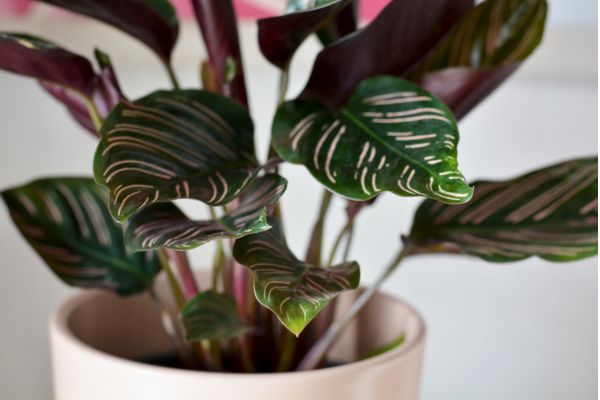
Calathea ornata is a tropical plant that likes warm temperatures and high humidity, ideally between 18 and 29°C. Keep it away from cold air, drafts, or sudden temperature changes, such as near air conditioners or heaters, as these can stress the plant. Bathrooms and kitchens are often good spots since they usually have higher humidity. The plant prefers air with humidity above 50 to 60%. If the air is too dry, the leaves may get brown edges or start to curl.
To improve humidity, you can:
-
- Group tropical plants close together.
- Put the pot on a tray of pebbles with water.
- Purchase a humidifier
Fertiliser
Calatheas benefit from gentle, consistent feeding rather than heavy doses of fertiliser. During spring and summer, use a diluted liquid houseplant fertiliser, typically at half-strength, and apply it once a month. We recommend Scotts Osmocote – Pour + Feed Indoor fertiliser. The key with any fertiliser is moderation, as these plants are sensitive to excess nutrients.
When the cooler temperatures arrive in autumn and winter, it’s best to pause feeding altogether. Fertiliser during this period can do more harm than good, and may lead to root damage or leaf issues. It’s also wise to avoid fertilising a plant that is showing signs of stress, as it won’t improve its condition and could even worsen it.
Common Pests & Bugs
Calathea ornata isn’t especially prone to pests, but it can occasionally attract unwanted visitors like spider mites, thrips, mealybugs, whiteflies, and scale insects, especially if the air is dry or the plant is stressed. These bugs often hide under the leaves or along stems, so regular checks are important. The best defence is prevention: inspect new plants before bringing them home, keep any affected plants separate, and maintain good humidity and airflow to make the environment less inviting for bugs.
If pests do appear, act quickly to keep them from spreading. Wiping them off by hand, trimming heavily infested leaves, or treating the plant with neem oil or insecticidal soap are all effective methods. Staying consistent with care and monitoring will usually keep infestations under control before they become a bigger problem.
Pruning & Maintenance
Calathea ornata doesn’t need much pruning, but regular clean-up helps keep it healthy and looking good. Remove any yellow, brown, or fully damaged leaves by cutting them close to the base with clean, sharp scissors. If only the tips or edges are dry or discoloured, you can simply trim those sections instead of removing the whole leaf. Be mindful not to take off too much at once—removing more than a third of the foliage can stress the plant.
In addition to pruning, basic maintenance goes a long way. Remove any dead stems from the base as they appear, and regularly wipe the leaves with a damp cloth to clear away dust. This not only improves the plant’s appearance but also helps it absorb light more efficiently for healthy growth.
How to Propagate Calathea Ornata?
Calathea ornata isn’t suited to propagation from cuttings—division is the most reliable method. This involves separating a mature plant into smaller sections, each with its own roots and leaves. The best time to divide is during repotting in spring or early summer, when the plant is growing and can recover more easily. Choose a healthy plant and make sure each section you divide has a good portion of roots and at least a few leaves to support new growth.
To propagate, water the plant the day before to help reduce stress. Gently remove it from its pot and brush off any loose soil. Find natural sections in the root ball and carefully pull them apart, untangling the roots as much as you can. If some parts are hard to separate, use a clean, sharp knife, but ensure you keep the roots whole. Plant each section in its own pot with fresh, well-draining soil, water them well, and put them in bright, indirect light with high humidity. Keep the soil moist and give the plants time to adjust. Some wilting at first is normal, but you should see new growth in a few weeks.
Common Issues with Calathea ornata
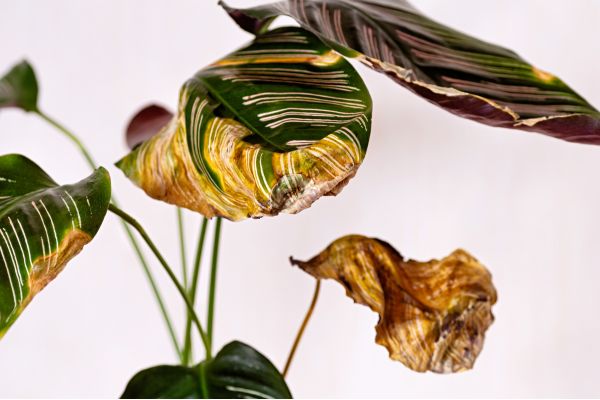
Calathea ornata can be a bit demanding as a houseplant, but most problems are manageable with the right care adjustments. Issues usually stem from inconsistent watering or less-than-ideal growing conditions, and can often be resolved by fine-tuning its environment.
Curling or Crispy Leaves
Calathea ornata often curls its leaves inward or gets crispy when conditions are too dry. This usually means the plant isn’t getting enough moisture, either from irregular watering or low humidity. Keeping the soil slightly moist and raising the humidity can help stop this problem.
Brown Leaf Edges
Dry, browning edges are a frequent complaint with this plant and are typically caused by low humidity or mineral buildup from tap water. If the air in your home is dry, consider adding humidity and using distilled water. Flushing the soil with distilled water periodically can remove any mineral buildup.
Yellowing Leaves
Leaves turning yellow are most often a sign of overwatering or poor drainage. If the soil stays too wet, the roots can struggle and begin to rot. Make sure your pot has adequate drainage and let the top layer of soil dry before watering again.
Faded or Bleached Patterns
If the plant’s signature stripes start to fade or look pale, it’s probably getting too much direct sunlight. Calathea ornata likes gentle, indirect light, so moving it to a shadier spot can help restore its bright colours.
Calathea ornata is a beautiful but somewhat demanding tropical plant that needs a consistent environment. It needs warm temperatures, high humidity, soft indirect light, and evenly moist soil to maintain its pink-striped foliage and steady growth. The closer you can match its natural rainforest conditions, the better it will perform. If it starts to struggle, it is not unusual. This plant can be sensitive, but with patience and the right care adjustments, it can bounce back and remain a standout feature in your home.