
How to Grow and Care for Elephant Ear Plants
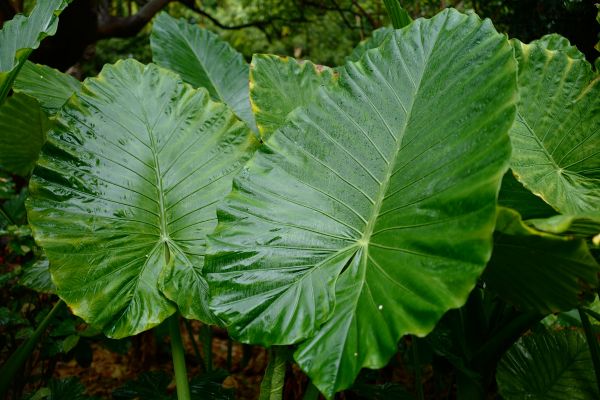
Looking to add a tropical feel to your home or garden?
Look no further than the Elephant ear. These eye-catching tropical plants have arrowhead or heart-shaped leaves that resemble elephant ears. They are known for their fast-growing, oversized foliage that turns ordinary spaces into a tropical paradise. Their impressive size and dramatic green foliage make them perfect for adding layers and a resort-style feel to outdoor gardens and patios, as well as indoor feature plants.
What Are Elephant Ear Plants?
Native to the warm, humid regions of Asia, Australia, and the Pacific Islands, these plants love moist, sheltered environments with plenty of humidity and filtered light. These dramatic plants belong to the Alocasia and Colocasia groups and are loved for their huge, impressive foliage and bold shape.
Depending on the type, Elephant Ears can stay compact at around 30–60cm tall or grow into towering tropical feature plants reaching 1–2m high. Growing from a central clump, these plants form lush, upright displays that add instant impact without taking over the garden.
Note: Elephant ears are poisonous, part of the stems and leaves can cause skin irritation and should be kept away from pets and children.
Types of Elephant Ear Plants
While Alocasia and Colocasia are both commonly known as elephant ears, they differ in several ways, making each suited to different growing conditions. The easiest way to tell them apart is by their leaves.
Alocasia leaves typically grow upright or outward, with stems attaching to the underside, giving a vertical appearance. Their foliage is often glossy with striking veins. Alocasia prefers well-drained soil and dislikes sitting in water, so it suits garden beds,pots, and indoor growing better.
In contrast, Colocasia leaves usually droop or point downward, creating a softer, cascading look. Their leaves can be matte or glossy depending on the variety. Their preferred growing conditions are in consistently moist soil and can even tolerate shallow standing water, making it ideal for planting near pond edges or as a water feature.
For outdoor tropical gardens, large-growing Alocasia and Colocasia varieties create a lush jungle effect and quickly fill empty spaces with dramatic foliage. If you’re growing these tropical beauties indoors or on a patio, the smaller Alocasia varieties are better suited to pots and compact spaces.
Best Elephant Ear Varieties for Australian Gardens
With many shapes, sizes, and foliage colours available, selecting the right type of plant for your climate and style is important. Each variety brings its own unqiue character, allowing you to create a space filled with bold statements, texture and tropical charm. Here are a few of the popular varieties to consider in your garden or indoor space.
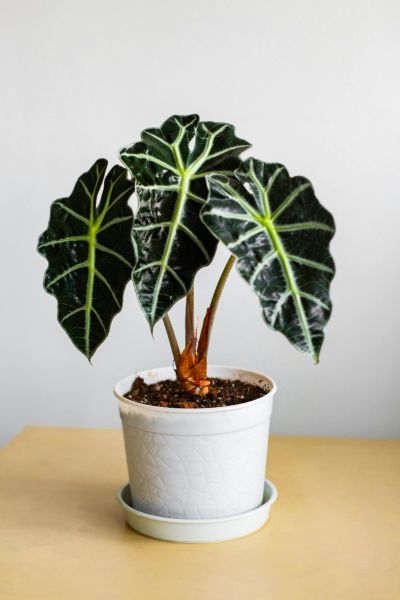
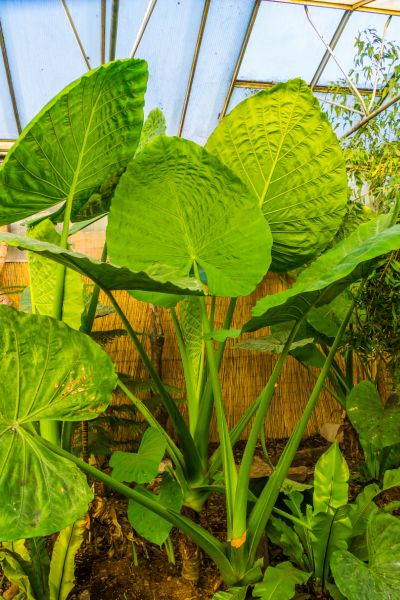
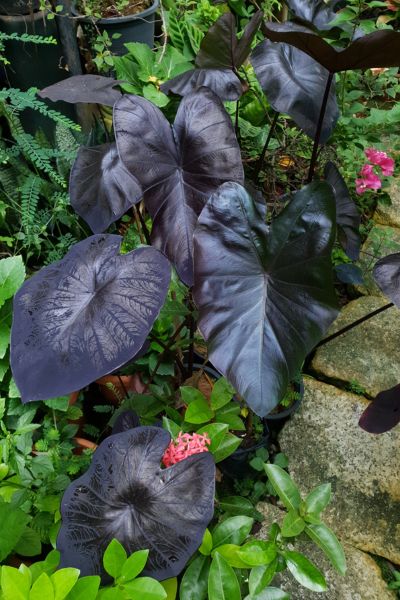
Alocasia amazonica (Alocasia Polly)
Alocasia ‘Polly’ is a compact variety known for its dramatic, glossy dark green leaves marked with striking silver-white veins and softly ruffled edges. Despite its small size, it delivers a strong tropical impact, making it a favourite for indoor styling and sheltered garden spaces. Typically growing to just 30–50cm, it performs best in warm, humid conditions with bright indirect light.
Alocasia macrorrhizos (Giant Elephant Ear)
Alocasia macrorrhiza is a giant tropical statement plant, loved for its enormous, lush green leaves. Growing up to 2m this dramatic variety instantly creates a dense jungle feel in large tropical gardens. It is fast-growing and produces massive ruffled foliage, making it a great garden centrepiece.
Colocasia esculenta (Black Magic)
Black Magic Elephant Ear is a dramatic tropical plant prized for its deep purple-black leaves, creating instant contrast and a standout feature in any garden. Growing up to 2m with leaves up to 60cm long, this variety thrives in warm climates and grows best in full sun to enhance its rich foliage colour. It prefers wet soil, making it ideal for wet areas and near ponds. Black Magic is tough and easy to grow and a low-maintenance choice for adding bold tropical colour.
How to Grow Elephant Ear Plants
Light and Soil
Plant in spring or early summer once the soil has warmed. In tropical and subtropical regions as long as the soil is at a minimum of 18 degrees you can plant all year round.
Outdoors choose a sheltered position that receives bright, filtered light or partial shade, and is protected from strong afternoon sun and damaging winds. While these plants love warmth and brightness, intense midday sun can damage the leaves. If you’re growing a dark-leaved variety, it can typically tolerate more direct sun and will assist in maintaining their colour.
Growing indoors select a brightly lit spot, ideally with indirect morning or afternoon sun exposure but not in direct sun as this will burn the leaves. Avoid open exposed locations prone to winds or draughts.
Elephant ear plants grow best in nutrient-rich, well-draining soil that resembles the fertile conditions of tropical region. When planting, dig a hole twice as wide and deep as the nursery pot, add plenty of or quality organic matter compost to the soil before putting the plant in place. Space larger varieties 1–1.5 metres apart to allow room for mature growth and good air circulation.
For pots, use a premium potting mix in a large container with adequate drainage holes.
Watering
Moisture is essential for healthy elephant ear plants. They prefer soil that stays consistently damp but not waterlogged. These plants have large leaves and extensive roots that need consistent moisture. In garden beds, water deeply 2-4 times a week during the spring and summer seasons.
If your plant goes dormant in winter, water it less and let the soil dry out a bit between waterings. Too much water during dormancy can cause the rhizomes to rot.
For pots or indoor plants water thoroughly once the top inch of soil feels dry, and allow excess water to drain away.
Fertisling
These plants are known to be hungry and require regular feeding to support healthy growth. Use a liquid plant fertiliser every two -three weeks during spring and summer. Alternatively you can use a controlled-release fertiliser in early spring and again in early autumn to provide the required nutrients.
Pruning and Maintenance
Remove yellow, damaged, or dead leaves by cutting them at the base with clean secateurs. Regularly wipe or rinse large leaves to remove dust and improve light absorption.
Some Alocasia varieties naturally become dormant in winter. Allow leaves to die back naturally before removing them, as the plant stores energy from the foliage for the next growing season.
Pests and Diseases
Elephant ears are usually tough but can sometimes be sensitve to pests and diseases. Regulary inspect your plant to ensure prompt action can be taken if affected.
Spider Mites
Check the stems and undersides of the leaves often for spider mites, in heavy infestations you will see webbing between the leaves and stems. If you spot mites, wash them off with water. If it is a sever infestation treat them quickly with insecticidal soap or neem oil.
Fungal Leaf Blight
Is a serious disease that presents as small spots or lesions that can rapidly grow. Clear in appearance they can turn yellow or puprle as they dry. To treat, remove the infected leaves immediately to prevent spread to the rest of the leaves and plant.
Apply a copper based fungicide to the tops and bottoms of the leaves and ensure good air circulation to prevent fungal issues.
Common Elephant Ear Problems
Although generally resilient, these fast-growing plants will show signs if their conditions are not optimal. Here are a few indicators to watch for.
Yellow or Brown Leaves
Usually means the plant is getting too much. Try to keep the soil evenly moist in warm weather, and water less often when it’s cooler. Make sure pots have good drainage holes and if in garden that the soil drains well.
Drooping Leaves
Often a sign of not enough water or light. Ensure the plant receives 6-8 hours of indirect sunlight each day. Keep to a consistent, thorough watering pattern, 2-4 times per week. Also, be mindful of dusty leaves. Due to the sheer size of the large varieties, the surfaces collect dust, which can block light. Wipe them with a damp cloth to help the plant absorb light better.